Change management is essential for modernizing government IT systems, balancing technical upgrades with human adoption. This guide outlines six practical steps to ensure success:
- Leadership Support & Vision: Secure strong leadership, communicate clear goals, and track progress with KPIs.
- Stakeholder Involvement: Identify key stakeholders, map their roles, and keep them engaged through updates and feedback.
- Training & Support: Provide tailored training and ongoing support to build user confidence and system adoption.
- Address Resistance: Identify resistance sources, mitigate concerns, and create feedback channels for continuous improvement.
- Use Tools & Frameworks: Leverage tools like the Prosci ADKAR model and stakeholder analysis frameworks to streamline change.
- Continuous Improvement: Monitor KPIs, remain flexible, and adapt plans to evolving needs for sustained success.
Federal Executive Forum IT Modernization Strategies in Government Progress and Best Practices 2024
1: Gaining Leadership Support and Setting a Clear Vision
Modernizing IT systems in government agencies isn’t just about the tech – it’s about leadership stepping up with a strong vision and unwavering commitment.
Communicating the Vision and Taking Ownership
Leaders need to clearly articulate a vision that aligns with the agency’s mission and connects with stakeholders. A great example is the U.S. Department of Veterans Affairs, which achieved success in IT modernization by openly sharing its goals, benefits, and timelines. This transparency helped align efforts across teams.
For leadership to effectively manage change, these elements are crucial:
- Clear Vision Communication: Define precise goals and outcomes that tie directly to the agency’s mission.
- Active Participation: Take charge of decision-making and allocate resources wisely.
- Progress Tracking: Use specific KPIs to measure how well the transformation is going.
- Regular Updates: Keep teams and stakeholders informed about progress and milestones.
Building a coalition of senior leaders who actively support the initiative is also essential. This means dedicating resources, removing barriers, and showing visible commitment to the transformation.
Breaking large-scale changes into smaller, manageable phases while keeping stakeholders engaged is a practical way to ensure leadership support leads to real, measurable outcomes. This phased approach helps organizations achieve lasting change.
Once leadership is solidly in place, the focus shifts to engaging stakeholders who will help drive the transformation forward.
2: Identifying and Involving Stakeholders
To turn leadership’s vision into reality, it’s crucial to identify and involve stakeholders. This ensures everyone is aligned and working together toward the same goals.
Mapping Stakeholders and Their Roles
In government IT projects, stakeholders generally fall into two groups:
| Stakeholder Type | Examples |
|---|---|
| Primary | End users, project sponsors, regulatory bodies |
| Secondary | Support staff, vendors, related agencies |
A power-interest matrix can help you prioritize stakeholders by evaluating their level of influence and interest in the project. When planning how to engage with them, consider factors like their decision-making authority, potential resistance, and the impact they may have on the project’s success.
Encouraging Stakeholder Collaboration
Collaboration thrives on active participation and open communication. Tools like surveys, focus groups, and regular meetings can help gather insights and build a sense of partnership.
Here are a few ways to keep stakeholders engaged:
- Regular Updates: Host bi-weekly meetings to share progress and address concerns.
- Feedback Channels: Use surveys and focus groups to gather input.
- Change Advocates: Identify influential individuals who can champion the project and rally support.
Be transparent about both the benefits and challenges of the project to build trust and encourage buy-in. Tailor your engagement strategies to match stakeholders’ influence and interest levels. For instance, those with significant power and interest will need closer involvement, while others may require less frequent communication.
Once stakeholders are on board, the next step is giving them the tools and knowledge they need to contribute effectively.
3: Providing Training and Support
Training and support play a key role in the success of IT modernization efforts within government agencies.
Designing Tailored Training Programs
Training helps employees gain the skills and confidence to adapt to new systems and processes. To be effective, training should be customized to fit employees’ specific needs, learning preferences, and technical expertise.
| Training Type | Purpose | Delivery Method |
|---|---|---|
| Essential Skills | Focus on core functionalities and workflows | Workshops and small group sessions |
| Compliance | Cover security and regulatory requirements | Online modules |
Good training programs combine technical knowledge with strategies for managing change. For example, the U.S. Customs and Border Protection agency has a training framework that balances technical skills with preparing staff for organizational changes.
Ensuring Ongoing Support
Support systems are just as important as training, helping employees navigate challenges long after the initial rollout. A strong support system might include:
- Help desks for immediate assistance
- Updated documentation for self-guided learning
- Regular check-ins to address emerging issues
It’s also essential to measure how well these support systems are working. Metrics like user satisfaction and system adoption rates can provide valuable insights. Feedback loops, such as user surveys and review meetings, ensure the support system evolves based on real-world needs. The U.S. Customs and Border Protection agency, for instance, uses monthly surveys and quarterly reviews to continually improve its support structure.
With effective training and support in place, the next step is to tackle potential resistance to change.
sbb-itb-cb1afb14: Handling Resistance and Gathering Feedback
Dealing with resistance is a key step in ensuring the success of IT modernization efforts in government agencies. Research highlights that organizations skilled in change management are 7 times more likely to achieve their project goals.
Identifying Resistance Sources
Resistance in government IT projects often stems from predictable sources:
| Resistance Type | Root Cause | Mitigation Strategy |
|---|---|---|
| Job Security Concerns | Fear of automation/job loss | Clearly communicate role changes |
| Process Changes | Comfort with existing workflows | Show how processes will improve |
| Technical Uncertainty | Lack of confidence in new systems | Offer targeted training sessions |
Tools like the power-interest matrix can help pinpoint where resistance might arise. Additionally, change champions – individuals who advocate for transformation within their departments – play a key role in addressing these challenges.
Creating Feedback Channels
Setting up effective feedback channels allows employees to voice concerns and feel part of the process:
| Channel Type | Purpose | Implementation |
|---|---|---|
| Regular Surveys | Monitor adoption progress | Monthly digital questionnaires |
| Focus Groups | Explore specific challenges | Quarterly department meetings |
| One-on-One Sessions | Address individual concerns | Bi-weekly check-ins with stakeholders |
By showing that feedback leads to actionable changes, organizations build trust and encourage greater engagement.
The Prosci Methodology emphasizes starting with individual awareness and capacity for change before expanding efforts to teams and departments. This phased approach ensures that everyone understands their role in the transformation process, making the shift smoother and more sustainable.
Regularly analyzing feedback helps uncover trends and refine strategies, ensuring the project stays aligned with its goals. By tackling resistance and using feedback to guide adjustments, agencies can create a smoother path to adopting modernized systems.
With resistance under control and feedback integrated, the next step is using structured tools and frameworks to implement change effectively.
5: Using Change Management Tools and Frameworks
For government IT projects, structured tools and frameworks play a key role in ensuring success. These tools not only simplify project planning but also address stakeholder concerns, helping to build trust and collaboration along the way.
Using Stakeholder Analysis Tools
Stakeholder analysis tools are essential for identifying and prioritizing the people involved in transformation projects. The best results often come from combining different methods:
| Tool/Framework | Purpose | Benefits | Example |
|---|---|---|---|
| Power-Interest Matrix | Categorizes stakeholders | Helps prioritize engagement | Maps influence levels |
| Influence-Impact Grid | Maps relationships | Identifies decision-makers | Highlights champions for adoption |
| Stakeholder Engagement Map | Tracks communication needs | Ensures targeted messaging | Guides outreach strategies |
Regular updates to these tools are important as project dynamics shift. For instance, during a state-level IT transformation, teams used the influence-impact grid to pinpoint champions who helped drive adoption across various agencies.
Implementing Prosci ADKAR Model
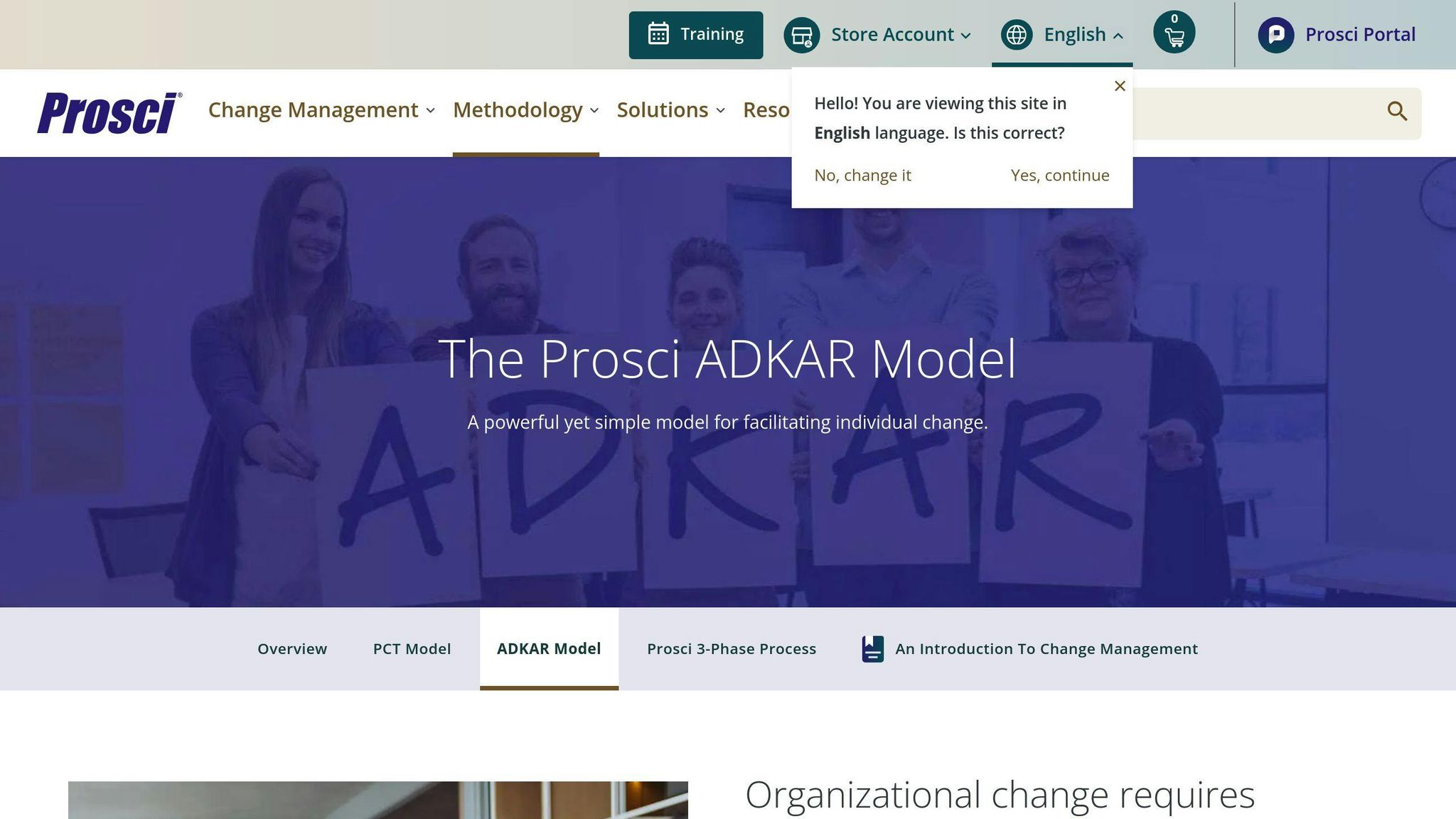
The ADKAR model breaks change into five clear steps: Awareness (understanding why change is needed), Desire (motivating participation), Knowledge (learning required skills), Ability (applying those skills), and Reinforcement (maintaining the change). This approach focuses on the human side of transitions:
| ADKAR Component | Focus Area | How to Apply |
|---|---|---|
| Awareness | Understanding the need | Organization-wide communication |
| Desire | Building motivation | Impact assessments and benefits |
| Knowledge | Learning new processes | Targeted training programs |
| Ability | Applying skills | Practice sessions and mentoring |
| Reinforcement | Sustaining change | Recognition programs and metrics |
6: Ensuring Continuous Improvement and Flexibility
Modernizing government IT systems requires a careful mix of structured evaluation and adaptability. This balance is key to maintaining stakeholder trust while encouraging ongoing system use and upgrades.
Setting Metrics for Evaluation
Tracking progress effectively means using the right Key Performance Indicators (KPIs) that align with both technical goals and organizational priorities:
| Metric Category | Examples | Purpose |
|---|---|---|
| User Adoption | Training completion rates, system usage | Measure engagement and system acceptance |
| Technical Performance | System uptime, response times | Keep an eye on infrastructure health |
| Business Impact | Cost savings, productivity gains | Evaluate organizational benefits |
| Change Readiness | Employee satisfaction, feedback rates | Gauge how well employees are adapting |
For instance, the U.S. General Services Administration uses a dashboard system to monitor technical performance and user adoption. When issues arise, they can act quickly to address them.
While these metrics provide a clear picture of progress, staying flexible ensures the project can adjust to changing needs.
Maintaining Flexibility
Government IT projects must stay adaptable even with structured plans in place. The U.S. Department of Defense employs iterative planning, frequent evaluations, and ongoing feedback to tackle new challenges without derailing progress.
Key strategies for flexibility include:
- Regular assessments to identify areas needing change
- Plans that allow for adjustments at specific intervals
- Continuous feedback from stakeholders via dedicated channels
The goal is to maintain forward momentum while staying responsive to new challenges. This approach ensures modernization efforts align with current demands and remain ready for future shifts.
Blending structured evaluation with adaptability not only supports technical success but also builds lasting stakeholder trust and system adoption. Agencies that embrace this approach can keep their modernization projects both effective and resilient.
Conclusion: Key Points for Effective Change Management in Government IT
Managing change in government IT requires a structured plan that addresses both technical challenges and the human side of transformation. Agencies like the U.S. Department of Defense and General Services Administration have shown that balancing these elements leads to meaningful and lasting progress.
Three key factors drive success in government IT change management:
| Success Factor | Key Components | Impact |
|---|---|---|
| Leadership Engagement | Clear goals, proper resources, active sponsorship | Boosts project success rates |
| Stakeholder Management | Early involvement, feedback channels, strong coalitions | Reduces pushback, increases adoption |
| Continuous Support | Ongoing training, monitoring, flexibility | Ensures long-term effectiveness |
Agencies that integrate proven strategies, such as the Prosci ADKAR model and stakeholder analysis tools, report smoother transitions and higher user adoption during IT modernization projects.
Strategic planning is essential. This includes setting clear goals, staying flexible for adjustments, and prioritizing stakeholder input. Such an approach allows government IT projects to meet evolving demands while achieving their objectives.
To keep progress on track, agencies should focus on:
- Building cross-departmental coalitions to back change efforts
- Crafting training programs tailored to specific user needs
- Establishing feedback systems to guide continuous improvement
- Using adaptable frameworks that align with regulatory standards
Steps like leadership involvement, stakeholder participation, targeted training, resistance management, effective tools, and ongoing refinement are all crucial. When agencies create an environment where change is well-understood and actively supported, IT modernization efforts are far more likely to succeed. These strategies can help agencies achieve meaningful digital transformation.
FAQs
What is change management for digital transformation?
Change management in government IT focuses on easing the transition to new technologies by tackling both technical hurdles and human concerns. As discussed earlier, the ADKAR model provides a step-by-step framework to guide organizations through the challenges of digital transformation.
This process helps minimize disruptions, lower resistance to change, ensure compliance with regulations, and uphold service quality during the transition. To implement change management effectively, agencies should:
- Define clear evaluation metrics
- Track adoption rates and improvements in efficiency
- Measure user satisfaction
- Stay open to adjustments based on feedback