AI is transforming public services, but its adoption requires careful risk management to ensure safety, fairness, and compliance. Here’s what you need to know:
- Why It Matters: AI failures in government can lead to biased decisions, data breaches, or service disruptions. Proper risk assessment is essential to prevent these issues.
- Challenges: Limited budgets, outdated systems, complex regulations, and sensitive data make risk management harder for public sector organizations.
- Key Features to Look For:
- Safety & Reliability: Tools must secure data and maintain stable operations.
- Regulatory Compliance: Adherence to legal and ethical standards is critical.
- System Integration: Compatibility with legacy systems and modern infrastructures is vital.
Quick Comparison of Leading Tools
| Tool | Focus | Features | Use Case Focus |
|---|---|---|---|
| Scale Evaluation | AI safety & reliability testing | Performance testing, compliance alignment | Validating AI systems |
| Google Cloud AI | Threat detection & data security | Zero Trust, threat monitoring, automation | Cybersecurity, data protection |
| Avero Advisors | Strategic advisory & integration | IT readiness, cybersecurity planning | Digital transformation |
These tools help public sector organizations assess and mitigate AI risks effectively, ensuring responsible and secure AI deployment.
Making Sense of Canada’s Algorithmic Impact Assessment Tool: A Guide to Responsible AI in Government
Features to Consider in AI Risk Assessment Tools
When selecting AI risk assessment tools for the public sector, it’s crucial to prioritize features that align with specific operational needs and compliance standards.
Safety and Reliability
In the public sector, ensuring data security and operational stability is critical. AI tools must meet high standards for safety and reliability. Scale Evaluation, known for its expertise in AI testing, has outlined a technical framework in their T&E white paper that serves as a benchmark for evaluating AI systems. Their partnership with the Artificial Intelligence Safety Institute Consortium highlights their dedication to maintaining strict safety protocols.
Regulatory Compliance
Beyond safety, adherence to legal and ethical guidelines is essential for deploying AI in public sector environments. Google Cloud AI integrates advanced security features like Zero Trust architecture – which verifies every access attempt – and AI-driven threat detection. These measures are paired with compliance solutions tailored to meet the needs of government agencies.
System Integration
Seamless integration is key for AI tools to function effectively within existing infrastructures. This includes managing various data formats, scaling to meet increased demands, and bridging legacy systems with modern interfaces – all while ensuring robust security. A notable example is the State of New Jersey’s use of Google Cloud AI, which improved threat detection capabilities while maintaining uninterrupted operations.
Key Integration Components:
| Component | Requirements |
|---|---|
| Data Security | Access Verification, Encryption |
| Compliance | Alignment with Federal Standards |
| Compatibility | Support for Legacy and Modern Systems |
| Monitoring | Threat Detection, Risk Metrics |
Leading AI Risk Assessment Tools for Public Sector
The public sector demands AI risk assessment tools that focus on security, compliance, and reliability. Below are some of the top solutions proven to support government operations effectively.
Scale Evaluation
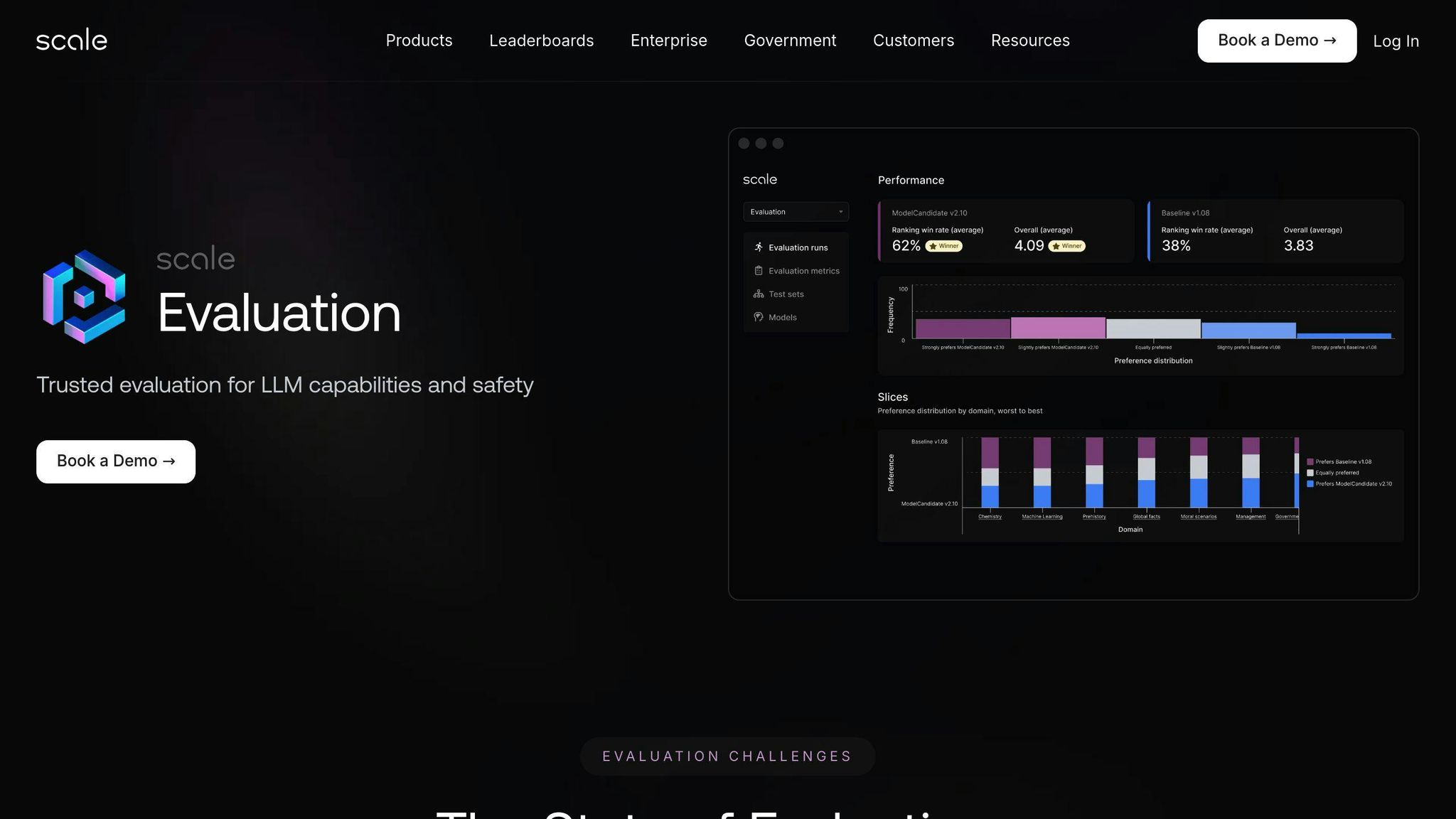
Scale Evaluation is known for its expertise in AI reliability testing, safety validation, and meeting federal compliance standards. They offer rigorous evaluation frameworks tailored for public sector agencies. As part of the Artificial Intelligence Safety Institute Consortium, they showcased their testing tools during DEFCON 31, highlighting their focus on AI safety and compliance.
Google Cloud AI
Google Cloud AI provides advanced tools for managing risks and safeguarding public sector operations. Its standout features include:
- Zero Trust Architecture for continuous access verification
- AI-powered threat detection for identifying vulnerabilities
- Gemini integration, enabling natural language security queries
- Automated incident summarization, streamlining response efforts
"Our solutions, developed for government agencies, leverage Google’s AI and Mandiant’s expertise to help protect sensitive information and AI-powered workloads"
Avero Advisors
Avero Advisors focuses on helping public sector organizations adopt AI while maintaining compliance and operational efficiency. Their services include:
- Assessing IT systems for AI readiness
- Planning and implementing cybersecurity measures
- Creating digital transformation strategies
- Ensuring seamless integration with existing systems
Avero Advisors acts as a bridge between cutting-edge AI technologies and the specific needs of the public sector, offering customized strategies and strong security measures.
These tools lay the groundwork for managing AI risks in government settings. Up next, we’ll break down their features to help organizations choose the best solution for their requirements.
sbb-itb-cb1afb1Comparison of AI Risk Assessment Tools
Tool Comparison Table
| Feature | Scale Evaluation | Google Cloud AI | Avero Advisors |
|---|---|---|---|
| Primary Focus | AI safety validation & reliability testing | Threat detection & data security | Strategic advisory & implementation |
| Regulatory Compliance | Federal mandate alignment, NIST standards | Zero Trust Architecture, Federal compliance | Public sector compliance guidance |
| Integration Capabilities | API-based integration | Native Google Workspace integration | System-agnostic advisory services |
| Core Features | AI model performance testing, safety metrics | Real-time threat detection, automated responses | Customized implementation strategies |
| Use Case Focus | AI system validation, safety assessment | Cybersecurity, data protection | Digital transformation, IT modernization |
| Support Model | Technical support, evaluation frameworks | 24/7 cloud support, threat monitoring | Strategic consulting, ongoing advisory |
These tools go beyond theory – they’ve been put into action to address challenges in the public sector.
Examples of Use
Real-world applications highlight how these tools solve public sector challenges. For instance, Google Cloud AI has been used in New Jersey to improve threat detection and risk assessment. Similarly, while the Department of Homeland Security (DHS) employs AI for border security, the Government Accountability Office (GAO) has recommended updates to address gaps in existing guidance.
Scale Evaluation collaborates with the AI Safety Institute, emphasizing their commitment to AI safety and compliance. On the other hand, Avero Advisors helps organizations bridge the gap between advanced AI technologies and public sector needs, ensuring strategies align with both technical and organizational goals.
Integration is key to success. Google Cloud AI’s compatibility with Google Workspace makes it an ideal choice for organizations already using Google’s tools. Meanwhile, Scale Evaluation provides adaptable frameworks that can fit seamlessly into various system environments, offering flexibility for diverse needs.
Conclusion and Action Steps
Key Points
Public sector AI risk assessment focuses on three main areas: safety validation, compliance, and integration. The Biden-Harris Administration’s AI Executive Order and OMB Memorandum provide detailed guidelines to help organizations navigate these challenges effectively.
Tools like Scale Evaluation, Google Cloud AI, and Avero Advisors offer targeted solutions for public sector needs, addressing everything from safety checks to smooth integration processes. For instance, Scale AI’s SEAL lab offers established methods to assess and reduce AI-related risks.
With these elements in mind, public sector organizations can move forward with practical strategies for managing AI risks.
Steps for Adoption
- Initial Assessment
Begin by thoroughly evaluating your current AI systems and identifying potential risks. - Tool Selection
Select tools that align with both your organization’s goals and federal requirements. Features such as Google Cloud AI’s Zero Trust Architecture can provide added security benefits. - Integration and Optimization
Develop governance structures to handle key areas like:- Performance reviews and compliance monitoring
- System integration
- Staff training programs
"Scale AI is committed to promoting AI safety. Through our test and evaluation offering, Scale Evaluation, customers can measure AI performance, safety, and reliability using industry-leading benchmarks." – Scale AI Blog
FAQs
Can AI handle risk management?
AI is a powerful tool for managing risks in the public sector. It can analyze massive amounts of data to spot patterns and threats that traditional methods might overlook. For example, New Jersey used Google Cloud’s AI to improve risk assessments and detect hidden risks.
That said, using AI effectively for risk management requires a structured and thoughtful approach to ensure it delivers the desired results.
How do you conduct an AI risk assessment?
Conducting an AI risk assessment involves several key steps to identify, evaluate, and address potential risks. Here’s a breakdown:
| Phase | Key Activities | Outcome |
|---|---|---|
| Risk Identification | Classify risks by severity | Create clear risk categories |
| Probability Assessment | Evaluate likelihood and impact | Develop a risk matrix |
| Mitigation Planning | Implement risk controls | Define actionable solutions |
| Documentation | Record all findings | Maintain regulatory compliance |
When adopting AI risk assessment tools, it’s important to integrate them with your existing IT systems. At the same time, ensure compliance with federal requirements, like those outlined in the Biden-Harris Administration’s AI Executive Order. Tools such as Scale Evaluation and Google Cloud AI can help streamline different stages of the process, from identifying risks to planning mitigation strategies.